Sintra-Portugal.com
The best independent guide to Sintra
Sintra-Portugal.com
The best independent guide to Sintra
Walking from Sintra to the Palácio da Pena and Castelo dos Mouros
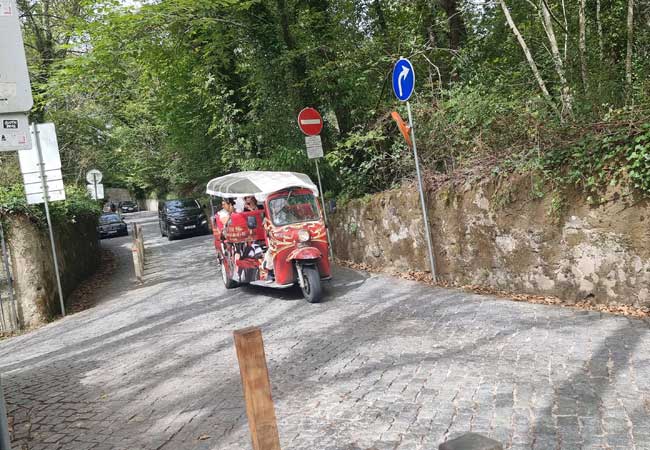
Crowning the highest peaks of the Serra de Sintra, the vibrant Palácio da Pena and the ancient Castelo dos Mouros are the town's most iconic landmarks. For most day-trippers, reaching these hilltop attractions means taking the 434 tourist bus, a service that is frequently overwhelmed by crowds, especially during the peak season. While taxis and tuk-tuks are available, they are an expensive alternative and offer little advantage on the congested roads
For the more adventurous visitor, there is a far more scenic option: hiking the Caminho de Santa Maria footpath. This trail leads directly from the historic centre of Sintra, winding up through the region's lush, dense forests to the entrances of the castle and palace
Be aware that this is a demanding uphill walk. The steep, 55-minute hike can be tiring, particularly in the heat of summer. However, the route rewards the effort with serene woodland scenery and beautiful viewpoints, offering a peaceful escape from the tourist crowds below
This guide will provide a detailed, step-by-step walkthrough of the Caminho de Santa Maria trail, showing you the best way to walk from Sintra's town centre to the Castelo dos Mouros and Palácio da Pena.
Insight: While this guide focuses on the uphill climb, following the route in reverse offers a wonderful way to return to Sintra's historic centre. The 30-minute downhill walk is a relaxing and scenic alternative to the crowded 434 bus, allowing you to end your day with a peaceful stroll through the forest. It is an ideal choice if you have some time to spare and are not rushing back to the train station.
Related articles: Sintra introduction - The Palácio da Pena

It's a long walk from the centre of Sintra up to the Palácio da Pena
Information for the hike to the Palácio da Pena
The Caminho de Santa Maria is the recommended and most direct walking route to the Palácio da Pena and Castelo dos Mouros. The trail is well-maintained and consists of two distinct sections: an initial walk along footpaths beside town roads, followed by a scenic paved path that winds up through the beautiful Sintra forests. Be prepared for the forested section, as it involves many stone steps and steep inclines.
It is essential that you do not attempt to walk along the main road, the Estrada da Pena. This narrow, one-way road is significantly longer than the hiking trail and is often congested with a constant stream of tourist buses, taxis and tuk-tuks, making it unsafe for pedestrians.
Before starting, be sure to carry enough water for the climb. There are no shops or cafes along the entire route, and the only facilities at the top are located inside the paid areas of the attractions, accessible only after buying an entrance ticket.
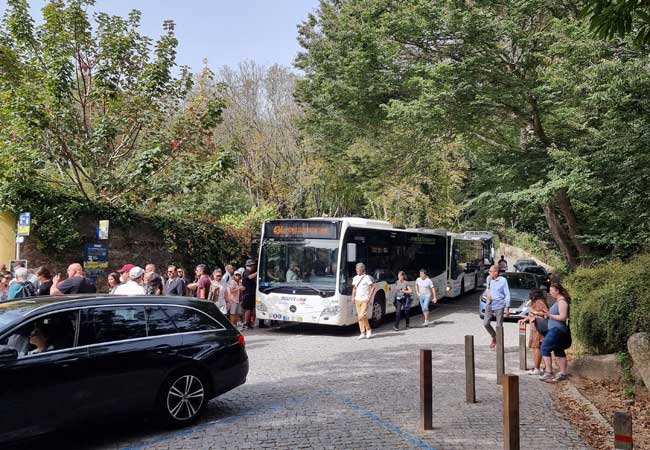
The Estrada da Pena in front of the Pena Palace, the ancient road was never designed for the high levels of tourist traffic.
The interactive map below displays the Caminho de Santa Maria and the walking route from the historic centre of Sintra or the train station up to the Palácio da Pena (green). Also on the map is the Estrada da Pena (blue) and the Vila Sassetti route is marked (orange).
Key: 1) Castelo dos Mouros 2) Entrance to the Palácio da Pena 3) Palácio da Pena 4) The historic centre of Sintra 5) Train station
Insight: This article details the hiking route from the historic centre of Sintra up to the Castelo dos Mouros and Pena Palace which is the green line.
A step-by-step photo guide to the hike
The trail begins on the eastern side of Sintra's historic centre, at the base of the Rua Visconde de Monserrate. The shops and cafés along this street are your last chance to stock up on water and snacks before the climb, so use them. Once you turn off the road and onto the forest path, there is nothing more for sale until you reach the top.
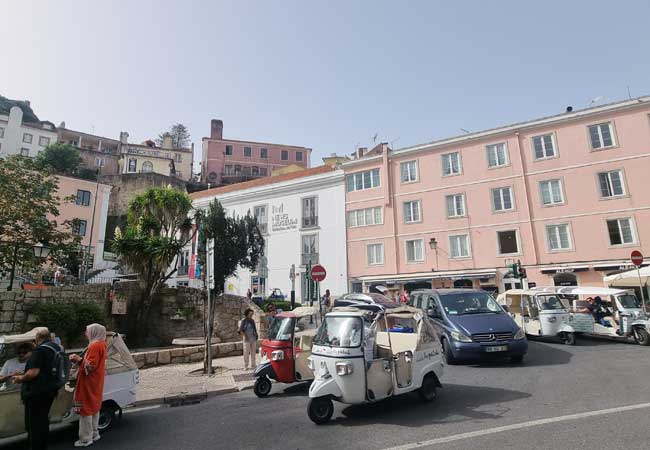
The base of the Rua Visconde de Monserrate, a popular pick-up point for tuk-tuk tours
The Rua Visconde de Monserrate climbs gently away from the centre, passing the Sintra Boutique Hotel and the rear of the Palácio Valenças, the elegant pink building that now houses the Câmara Municipal de Sintra (Sintra Council).
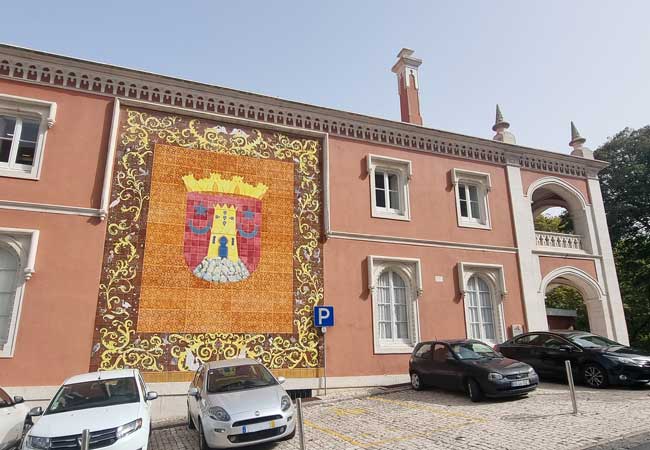
The Palácio Valenças
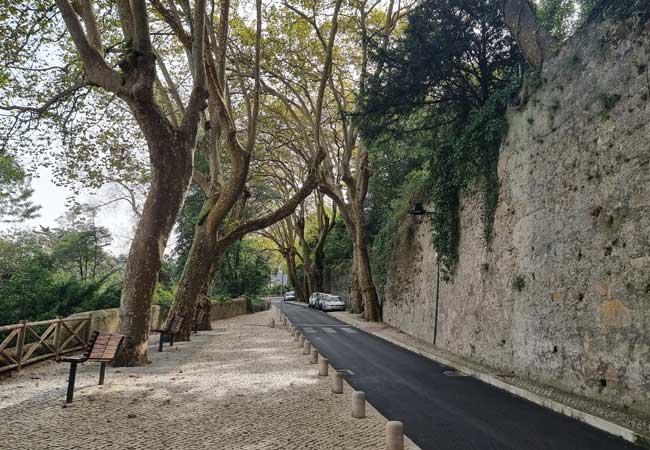
Towards the top of the road, the path widens and is lined with trees and benches. Take an honest measure of yourself here. If this first gentle hill has already left you puffing, the climb is only going to get harder from this point, and there is no shame in turning back and catching the 434 bus instead.
If you are coming straight from the train station, you can save yourself the first stretch of the Rua Visconde de Monserrate by cutting through the Parque da Liberdade. The park entrance is a few minutes from the station, and the shortcut is a pleasant one, climbing gently through shaded paths and past a small lake.
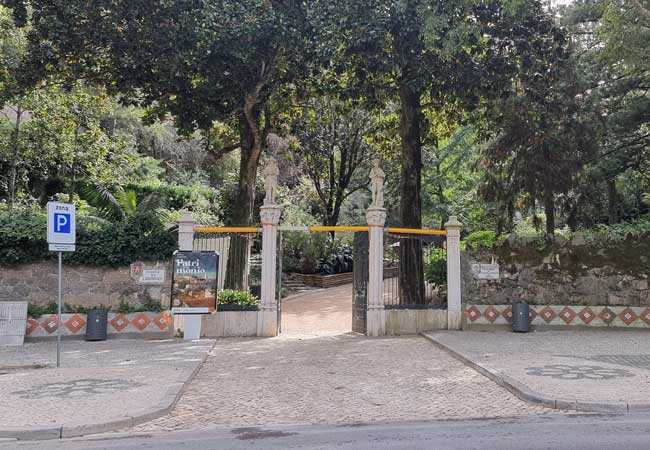
The entrance to the Parque da Liberdade
Once inside the park, follow the paths uphill to the southern exit, which brings you out onto the Rua Visconde de Monserrate. From there, turn left and continue the climb.
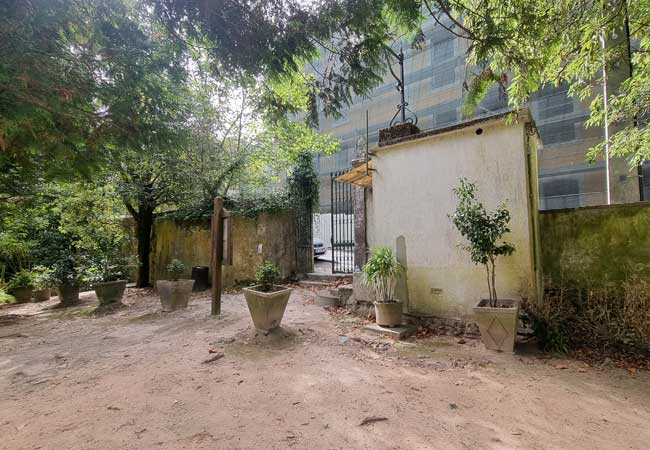
The upper exit of Parque da Liberdade as it joins the Rua Visconde de Monserrate
Both routes continue up the Rua Visconde de Monserrate, so turn left here if you have just come out of the Parque da Liberdade. At the top of the road, look for a small set of stone steps on the right, the Escadinhas dos Clérigos.
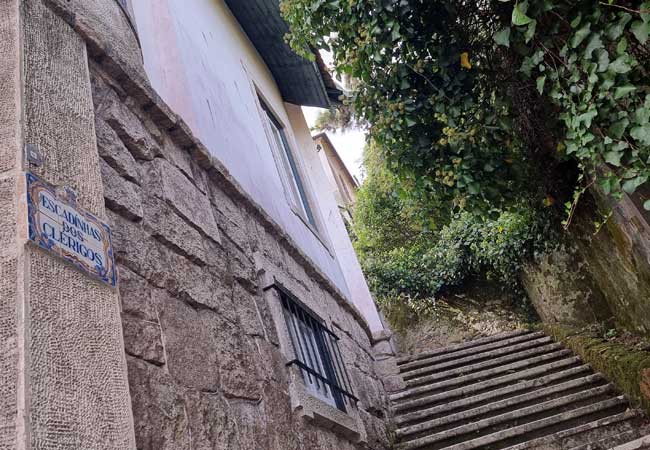
And these steps go on, and on.
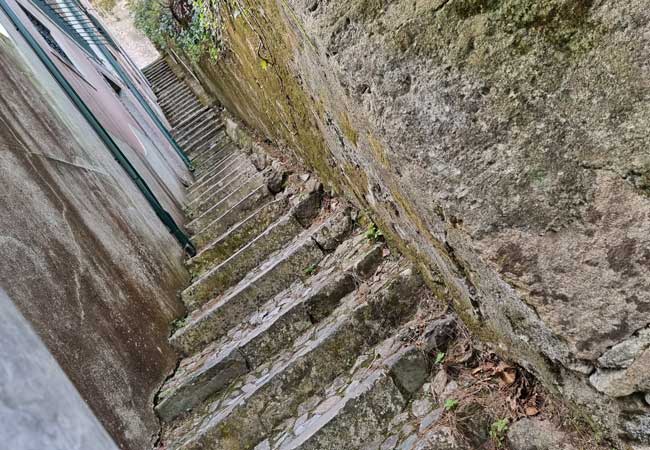
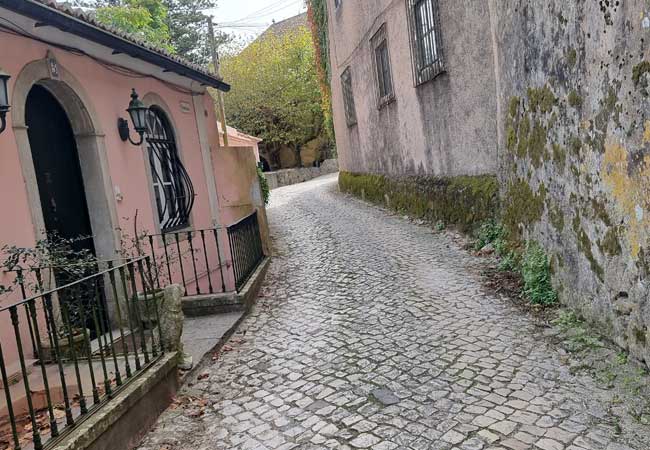
At the top of the Escadinhas dos Clérigos, turn left onto the Calçada dos Clérigos.
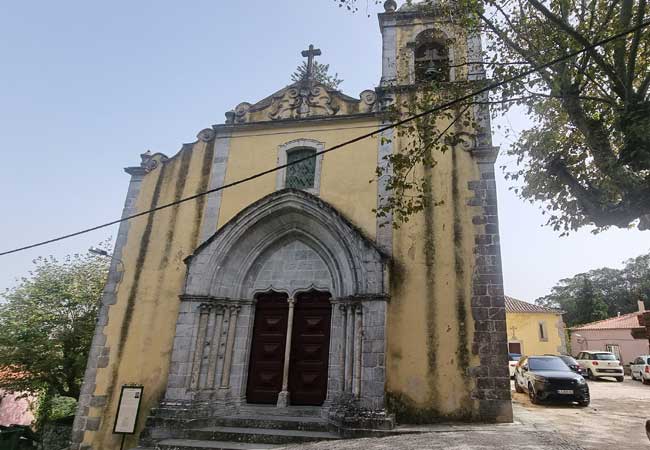
The Calçada dos Clérigos passes the Igreja de Santa Maria, one of the finest Gothic churches in Sintra. Like so many buildings in the Lisbon region, it was badly damaged by the 1755 earthquake and rebuilt in the Baroque style that the city favoured during its reconstruction.
Just past the church, turn right onto the cobbled Rampa do Castelo, where a sign cheerfully informs you that it is still 1.4 kilometres uphill to the Palácio Nacional da Pena.
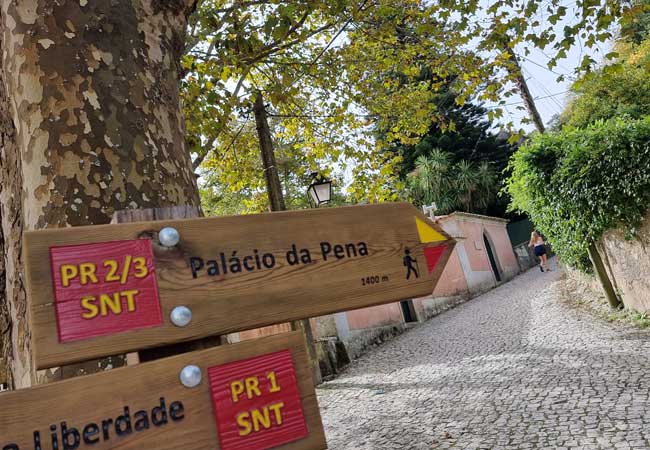
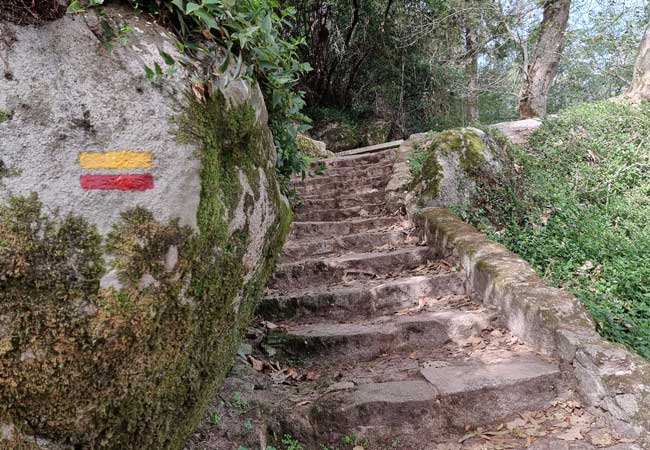
From this point on, the route is waymarked in red and yellow, though in truth there is only one path and you will not need the markings to find your way.
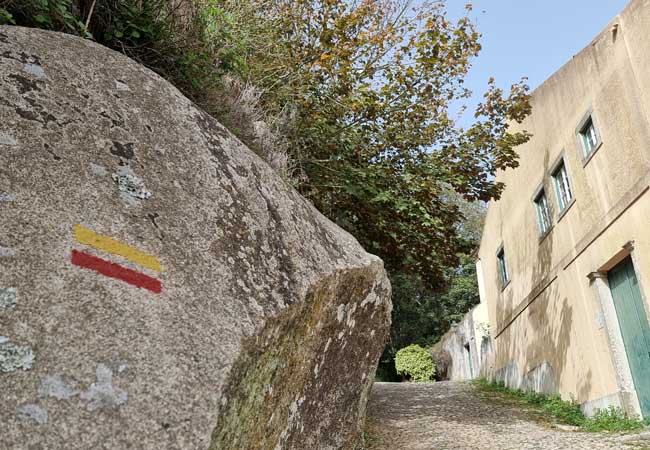
At the end of the Rampa do Castelo stands the small Igreja de São Miguel.
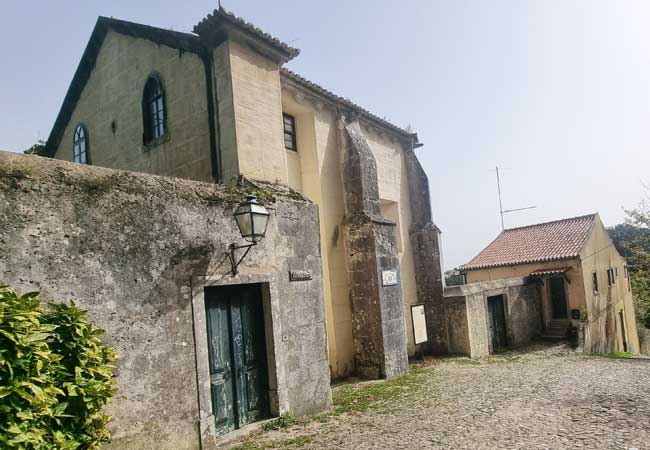
Just past the church, a flight of stone steps marks the end of the road section and the start of the Caminho de Santa Maria proper, where the path leaves the town behind and climbs into the forest.
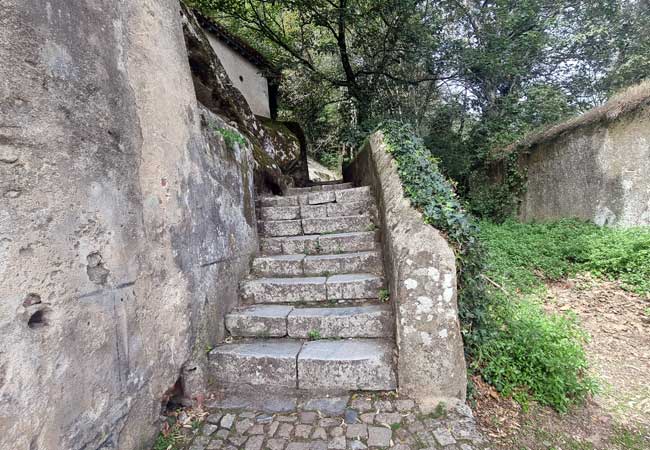
The path soon passes through an outer gateway in the old wall. Step inside and look up. The roof structure above your head is unlike anything else on the route, an unusual piece of stonework that almost everyone walks straight under without noticing.
Insight: This is the first of several entrance fee signs you will see for the Castelo dos Mouros, but you do not need to pay anything here. The fee only applies if you actually enter the castle itself. The entire Caminho de Santa Maria can be walked free of charge.
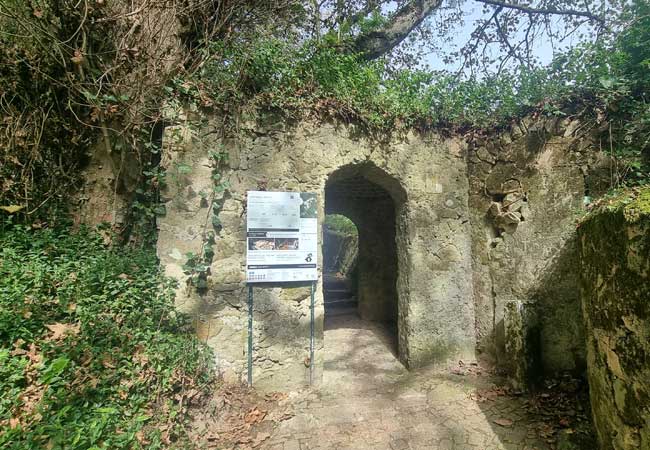
From the gateway, the route becomes a series of cobbled paths that zigzag up the side of the hill. At the first switchback you will find a bench and a decent viewpoint, and I would take the chance to sit for a minute.
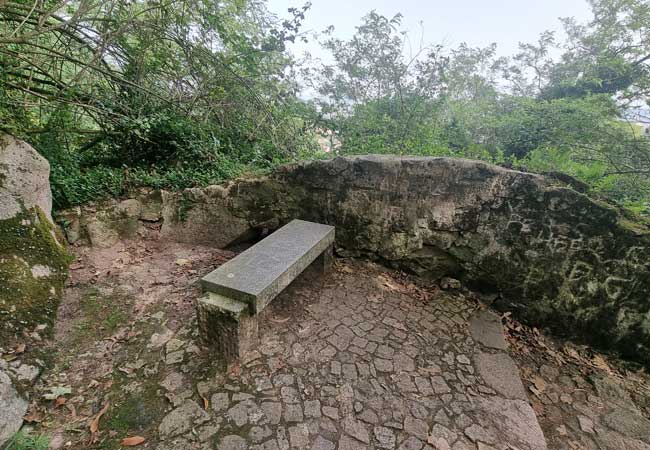
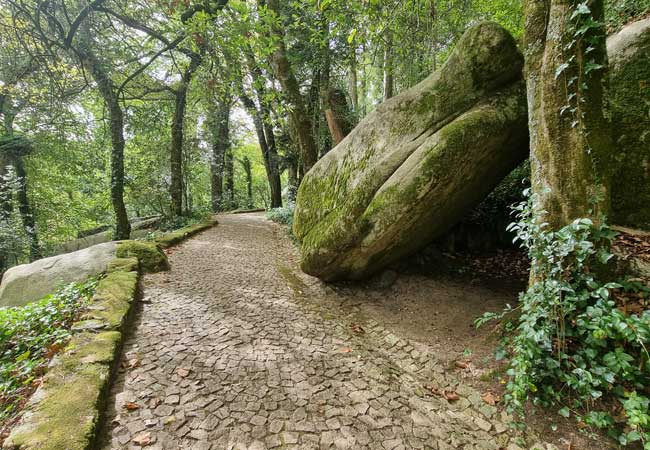
The path now winds past the huge granite boulders that scatter the hillside. This is the most peaceful section of the entire hike, and on a quiet morning you may have the path almost to yourself.
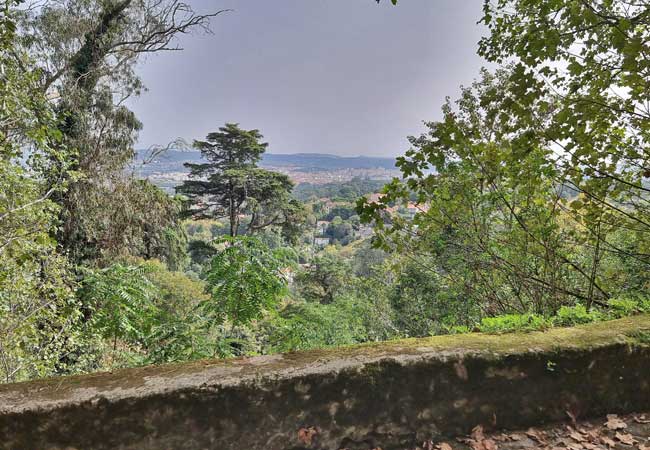
At the second switchback, a clearing opens through the trees to give you a view out over the suburbs of Mercês and Algueirão-Mem Martins.
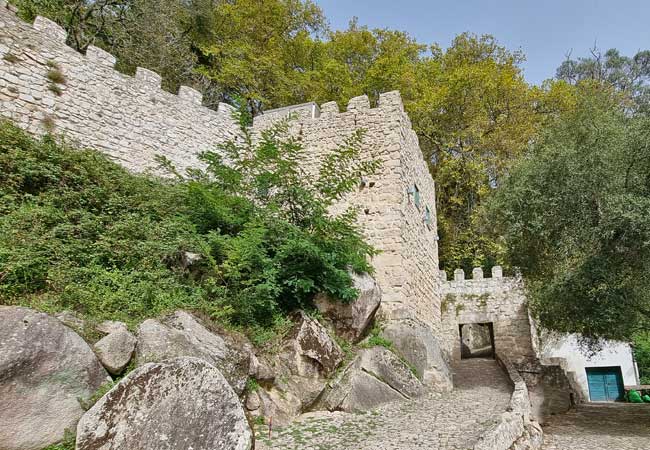
A little further up, the path passes through the Segunda Cintura de Muralha, the Second Walls. During the Moorish era between the 9th and 11th centuries, this outer ring of fortifications sheltered the local population and their animals when raiders came over the hills.
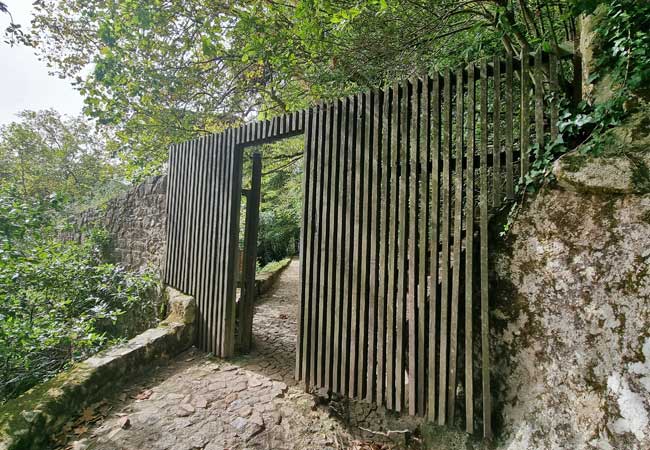
The ancient Segunda Cintura de Muralha walls and a modern wooden gate
The trail then runs along the inside of the wall, weaving past more outcrops of boulders the size of small houses.
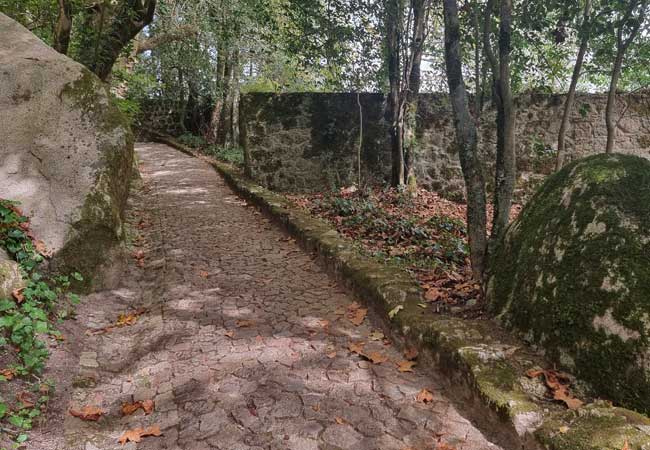
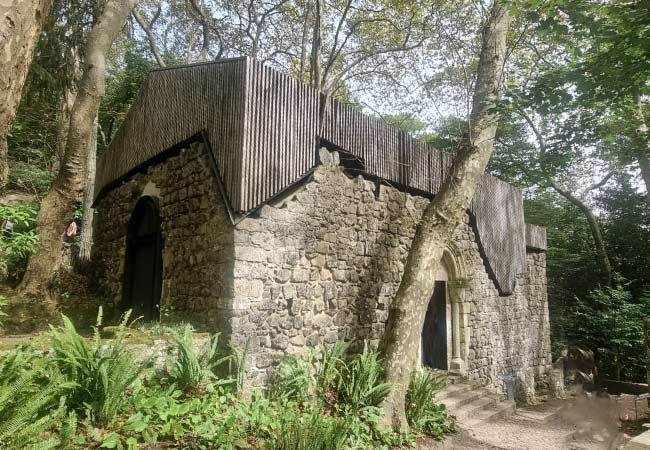
On the next eastward stretch, the path splits. A downhill path leads to the Casa do Guarda, the old guard's house, while a flight of steps continues up to the castle. The Casa do Guarda is only a minor attraction, and I would skip it if you are planning to visit the Moorish Castle itself, which is far more interesting and only a few minutes further on.
The exterior walls of the Casa do Guarda. There is little point in adding to your hike to visit it
Two more steep climbs follow, with steps cut into the path. You will pass an abandoned tourist building and then arrive at the Igreja de São Pedro de Canaferrim. Built in the 12th century, this was the first church ever constructed in the Sintra region. Today it serves as the Moorish Castle Interpretation Centre, with a small display of artefacts found within the castle complex. From this point on, the worst of the climb is behind you.
The Igreja de São Pedro de Canaferrim
This is where the path forks. If you want to visit the Castelo dos Mouros, continue past the church. If you would rather head straight to the Palácio da Pena, take the path on your left.
Insight: If you are needing the toilet by this point, there are facilities inside the paid section of the Moorish Castle, but there are also free public toilets (in good condition) on the road opposite the castle entrance, about 300 metres from the São Pedro church. To reach them, follow the path signposted to the Pena Palace.
I would strongly recommend taking the time to visit the Castelo dos Mouros. It is a fascinating ruined fortress, and the views from its battlements, 466 metres above sea level, stretch right across the Sintra region to the Atlantic. A typical visit takes about an hour, the entrance fee is €12, and the castle is always far quieter than the busy Palácio da Pena.
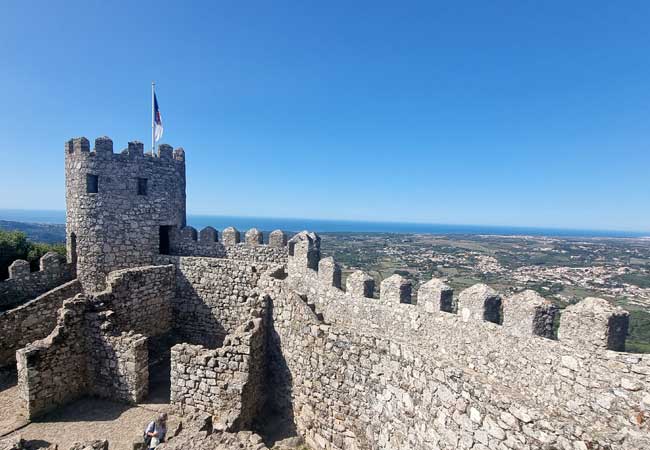
The view from the Castelo dos Mouros' battlements over the Sintra region and out to the Atlantic Ocean
To carry on to the Palácio da Pena, take the path to the left of the Igreja de São Pedro de Canaferrim and follow the signs.
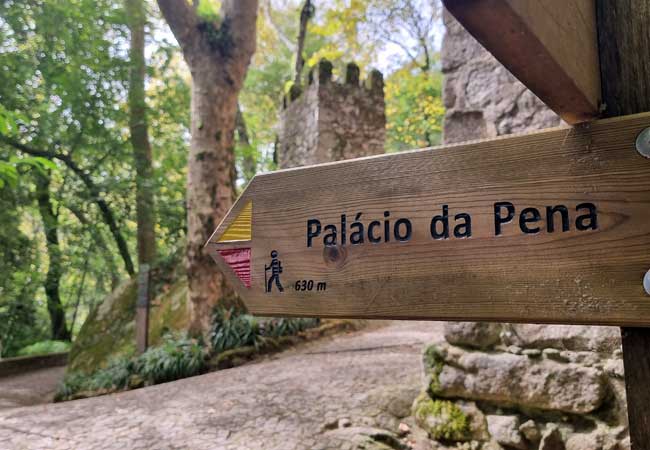
The path to the Pena Palace is 630 metres, and mostly flat from here
The path from the Castelo dos Mouros to the main road is level, but in summer it can be uncomfortably packed with foot traffic moving in both directions.
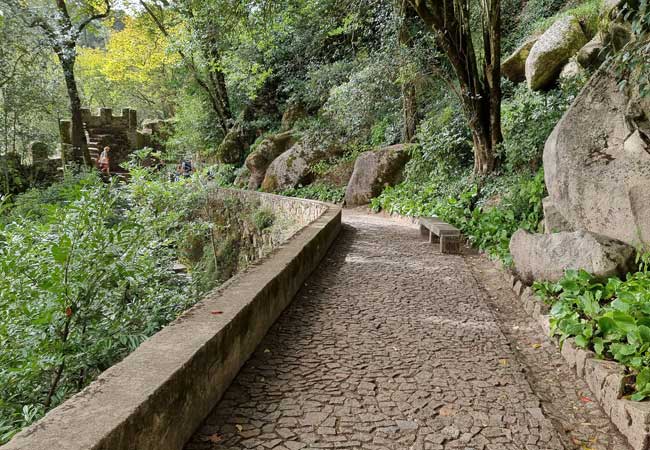
The path then joins the road at the Castelo dos Mouros ticket office. The free public toilets I mentioned earlier are directly across the road from the ticket office.
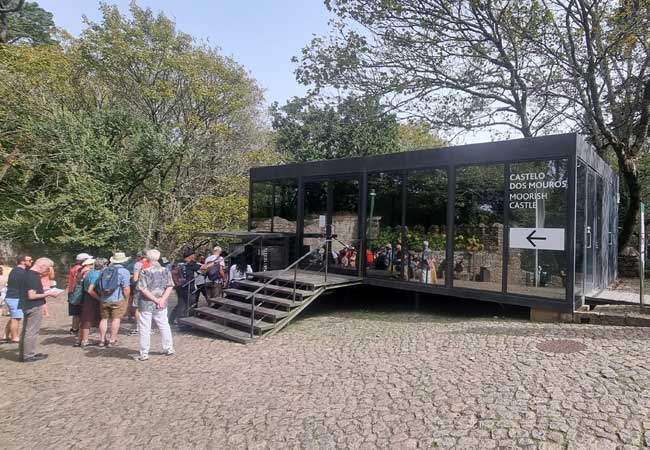
To continue the walk to the Pena Palace, turn left along the road. You have two options here. One follows the road itself, which is always busy with traffic. The other is a signed forest footpath, and I should warn you that it is in surprisingly poor condition: uneven, rough underfoot, and not the pleasant woodland stroll the sign suggests.
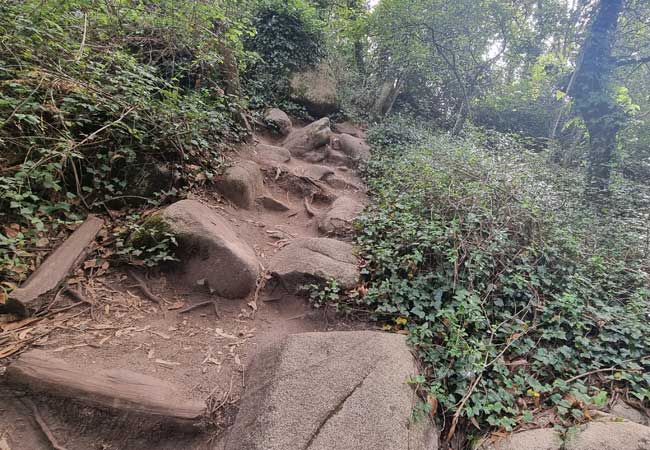
The signed footpath between the Castelo dos Mouros and the most visited tourist attraction in Portugal is in surprisingly poor condition
If you take the road route, keep your wits about you. The tour buses, taxis, and tuk-tuks coming up the hill often need to keep their speed up to clear the gradient, and the road has no pavement to retreat to.
When you arrive at the Palácio da Pena, the calm of the forest ends abruptly. You will find yourself in the chaos of the ticket machines and the coach drop-off point, where the day-trippers arrive in waves.
The Palácio da Pena is the most famous sight in Sintra and one of the most visited monuments in Portugal. Because of its popularity, entry to the main palace building is by timed ticket, with a 30-minute window to enter once your slot begins.
In peak season the most popular slots sell out, and I would advise booking at least a day in advance. Tickets can be bought from Getyourguide.com for €20. There is also a cheaper €10 ticket that covers the terraces and the gardens around the palace but not the palace interior. Often this cheaper “grounds ticket” is what I get.
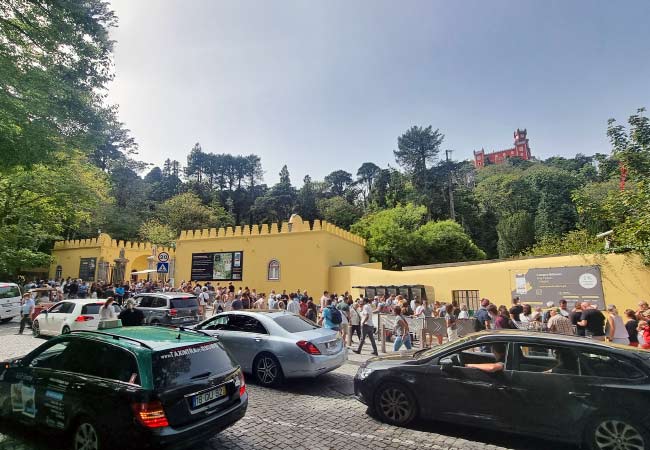
The entrance to the Pena Palace on a quiet October Monday. In summer it will be much, much busier
Insight: There is a second and much quieter entrance to the Pena Palace, the Vale dos Lagos gate. It sits 300 metres downhill from the Castelo dos Mouros ticket office, along the main road. When you leave the Moorish Castle, simply turn right instead of left.
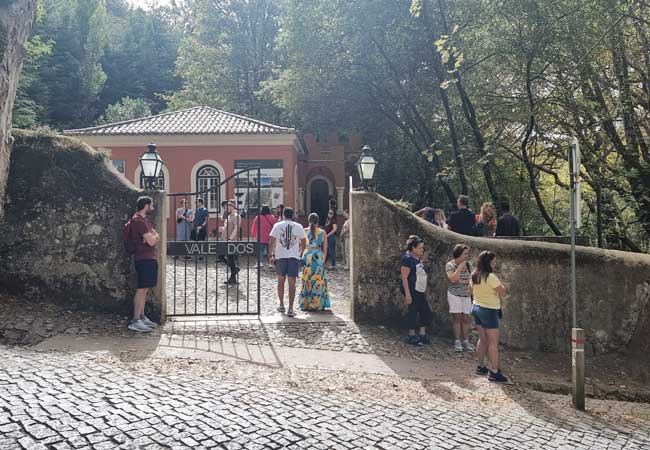
The Vale dos Lagos entrance is always quieter, but once inside it is a longer walk to the palace itself
Discover more of Sintra with our most popular guides


About this guide I'm Philip Giddings. I have been exploring Portugal since 2001, and writing the independent guides at Sintra-Portugal.com since 2008. I live in Lisbon with my Portuguese wife, Carla, who first took me up to Sintra on one of my earliest trips to the country. We have been going back ever since: summer crowds, autumn fog, the quiet Sunday afternoons of January. The region has changed a great deal in twenty-five years of visits, and we have watched it happen.
The site takes no payment from tourist boards, tour operators, or attractions for inclusion. It is funded by affiliate commissions on tour bookings, disclosed on every page that contains them. Every practical detail in these guides (ticket prices, opening hours, bus routes, time-slot policies) is checked against the official Parques de Sintra site, and verified in person on visits two or three times a year. Read my full bio here.